
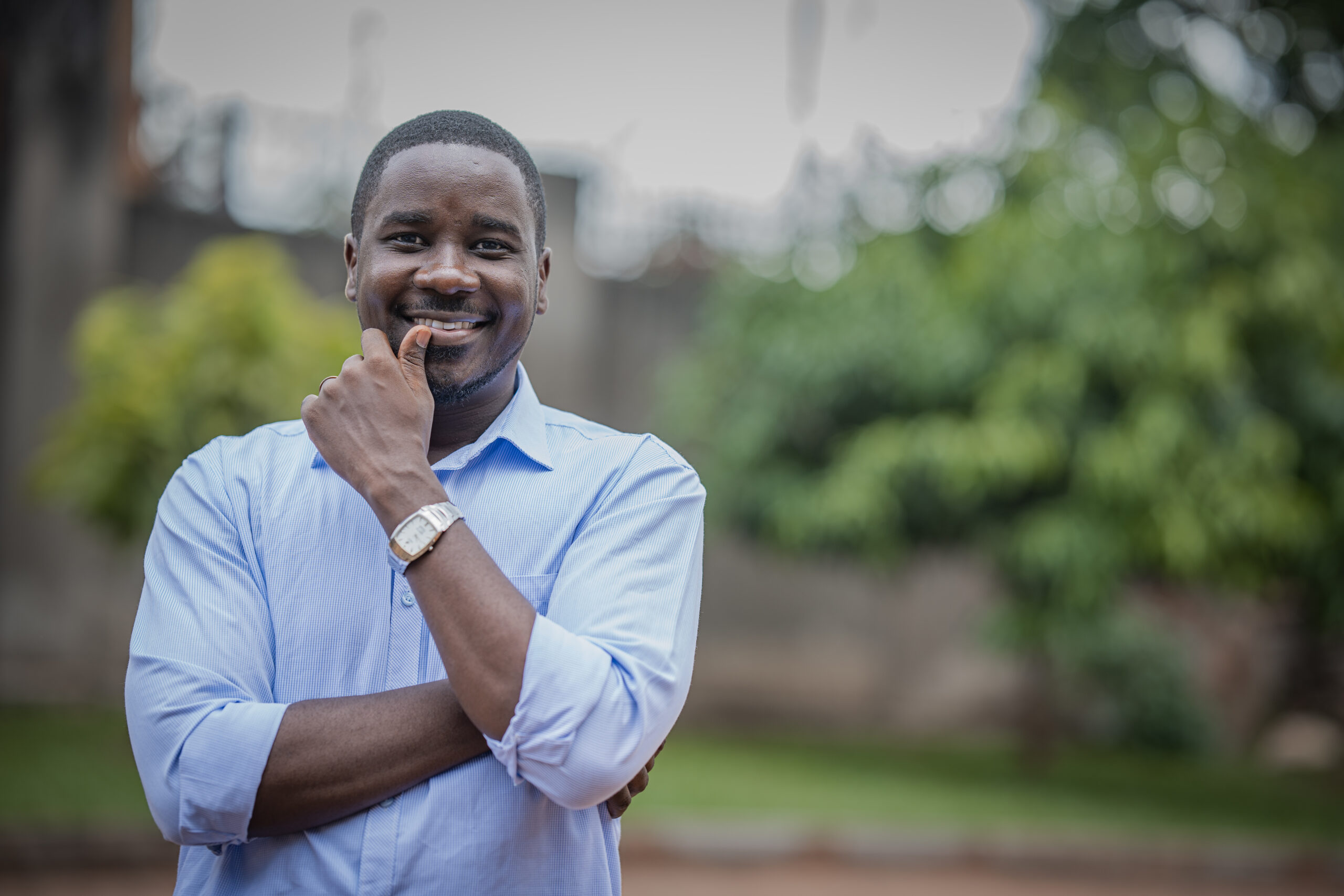
Paul Collins Rubaihayo: The Ugandan Humanitarian Building a New Vision for Disability Inclusion and Social Impact in Africa
From journalism to humanitarian leadership, from a grassroots act of compassion to building an institution with regional ambitions, Paul Collins Rubaihayo is redefining what sustainable social impact can look like in Africa.
In a world where humanitarian challenges are often discussed through statistics, reports and development targets, some leaders choose to approach change differently. They begin by listening to people, understanding their struggles and building solutions around the realities of their lives.
Paul Collins Rubaihayo, a Ugandan humanitarian, social impact leader and Founder and Executive Director of Sapphire Africa Foundation, is among the leaders pursuing this approach.
His journey is one of purpose, persistence and an evolving understanding of what it takes to create lasting social change. Over the years, he has moved from journalism and broadcasting into humanitarian leadership, building an organisation committed to disability inclusion, mobility, economic empowerment and sustainable community development.
Today, his work is increasingly associated with a bigger question facing Africa’s development sector: how can African institutions move beyond traditional charitable interventions and build locally driven systems that give people the opportunity to live independently, participate fully in society and shape their own futures?
It is a question that continues to define his leadership.
A Journey That Began With a Simple Act of Compassion
The story of Paul Collins Rubaihayo and Sapphire Africa Foundation begins in Northern Uganda.
In 2014, while on a professional assignment in the region, Paul encountered a 13-year-old girl who had been sent home from school because her family could not afford school fees amounting to just $15. Beyond the immediate financial challenge was a much more troubling possibility: without access to education, the girl risked being pushed into early marriage.
For Paul, the situation was difficult to ignore.
He intervened, providing $45 to cover the girl’s school fees for an entire year. It was a relatively small financial contribution, but it represented something much bigger: an opportunity, a second chance and the possibility of a different future.
That experience became one of the defining moments behind the establishment of Sapphire Africa Foundation.
What began as a response to one child’s circumstances gradually developed into a broader commitment to supporting vulnerable communities, strengthening families and addressing the barriers that prevent people from reaching their potential.
The Foundation was established in 2014, with substantial organisational operations developing from 2017.
For Paul, the lesson was clear: meaningful humanitarian work should not end with responding to an immediate need. It should address the underlying barriers that keep people vulnerable in the first place.
From Journalism to Humanitarian Leadership
Before becoming a full-time humanitarian leader, Paul built his professional foundation in journalism and broadcasting.
His experience in the media industry exposed him to different communities, human experiences and social realities. It also strengthened his ability to communicate complex issues, engage diverse audiences and understand the importance of giving visibility to stories that are often overlooked.
However, his growing interest in community development eventually led him towards a different professional calling.
He began to see humanitarian work as an opportunity to move beyond documenting people’s experiences and become directly involved in addressing the challenges affecting their lives.
The transition was not simply a career change. It was a shift in purpose.
Moving from journalism into nonprofit leadership introduced him to a different set of responsibilities: building teams, managing resources, developing programmes, cultivating partnerships, navigating institutional challenges and creating systems capable of delivering sustainable impact.
Over time, he developed an approach to leadership that combines communication, strategic thinking, institutional development and community-centred problem-solving.
His experience in journalism remains an important part of his leadership identity, particularly in his ability to communicate social challenges, advocate for inclusion and bring different stakeholders together around a shared vision.
Building Sapphire Africa Foundation: Beyond Traditional Charity
As Founder and Executive Director of Sapphire Africa Foundation, Paul has spent years building an organisation committed to improving the lives of underserved communities.
Established in Uganda, Sapphire Africa Foundation has developed its work around the belief that people should not be defined by poverty, disability or the circumstances into which they are born.
Its work has evolved towards disability inclusion and empowerment, particularly through mobility support, orthotics, rehabilitation access, caregiver support, vocational development and economic independence.
One of the central ideas guiding this evolution is that assistance alone is not enough.
A wheelchair, for example, is not simply a mobility device. For a child, it may mean returning to school. For an adult, it may mean accessing employment. For a family, it may reduce the physical and financial burden of providing care. For a person who has spent years isolated, it may represent an opportunity to participate in community life again.
This understanding has influenced how Paul approaches disability inclusion.
Rather than viewing people with disabilities solely as recipients of assistance, he advocates for approaches that recognise their abilities, aspirations, economic potential and right to participate in society.
Under his leadership, Sapphire Africa Foundation has developed relationships with local institutions, international partners, philanthropic organisations, corporate supporters and community stakeholders to advance this mission.
The organisation’s guiding philosophy captures this direction:
Beyond Inclusion. Toward Independence.
Championing Disability Inclusion and the Right to Mobility
A significant part of Paul’s humanitarian work has centred on addressing the barriers experienced by children and families affected by disabilities.
Through Sapphire Africa Foundation’s Duchenne Muscular Dystrophy (DMD) and broader disability support initiatives, he has worked to improve access to mobility solutions, physiotherapy, orthotics, caregiver support and other essential interventions.
His engagement with families affected by Duchenne Muscular Dystrophy has particularly reinforced his understanding of the long-term challenges associated with disability.
These families often navigate complex healthcare needs, limited rehabilitation services, financial pressure and social isolation. Access to appropriate mobility equipment can be difficult, especially in communities where specialised assistive devices are expensive or unavailable.
Working with international supporters and partners, including the late Tim Gillen, whose sons Everett and Austin lived with Duchenne Muscular Dystrophy, Sapphire developed support initiatives for affected families.
However, Paul’s vision extends beyond any single condition.
He believes that disability inclusion must be approached as a broader development priority, involving accessible environments, appropriate technology, economic participation, family support and the removal of barriers that prevent people from living independently.
For him, the measure of success is not simply how many assistive devices an organisation distributes. It is what people are subsequently able to do with the opportunities those devices create.
From Importing Wheelchairs to Building African Mobility Solutions
One of the most significant developments in Paul’s leadership journey is his commitment to advancing locally manufactured wheelchairs and assistive devices designed for African communities.
For years, many families in Uganda and other African countries have depended on imported mobility equipment. While these devices provide essential support, they can be expensive, difficult to repair and poorly suited to rough terrain, rural roads and the everyday environments in which many people live.
A wheelchair designed for smooth urban pavements may not perform effectively in a rural community with uneven roads, difficult pathways and limited maintenance services.
Paul believes Africa needs to develop its own solutions to these challenges.
This thinking is driving the development of Sapphire Mobility, an initiative under Sapphire Africa Foundation aimed at locally fabricating affordable, durable and customised wheelchairs and other mobility solutions.
The ambition is bigger than manufacturing equipment.
The initiative seeks to create a more complete mobility ecosystem that brings together local production, appropriate design, repair and maintenance, technical skills development and economic opportunities.
By building local capacity, the Foundation aims to reduce dependence on expensive imported equipment, improve access to customised mobility solutions and strengthen the sustainability of assistive technology services.
Importantly, the model also creates opportunities for people with disabilities and other community members to participate in skills development, fabrication, maintenance and service delivery.
For Paul, this represents a fundamental shift in how humanitarian interventions can be designed.
Instead of simply importing solutions and distributing them to communities, African institutions should increasingly have the capacity to design, produce, maintain and improve the solutions their communities need.
It is an approach that connects disability inclusion with local innovation, employment creation and economic development.
His vision is to see locally developed mobility solutions become more accessible across Uganda and, eventually, other African countries.
Building Economic Independence Through Skills and Opportunity
Paul’s understanding of disability inclusion also extends into economic empowerment.
He recognises that access to mobility is only one part of independence. People also need opportunities to develop skills, earn incomes, establish enterprises and participate in economic life.
Through Sapphire Africa Foundation’s economic empowerment initiatives, including the Sapphire Skills to Scale programme, the organisation works to strengthen the capacity of persons with disabilities, caregivers and vulnerable individuals to pursue sustainable livelihoods.
The approach combines practical skills development, entrepreneurship, mentorship and pathways to financial independence.
The Sapphire Fund further reflects this commitment by supporting women entrepreneurs through a revolving financing model.
For Paul, economic empowerment is particularly important because vulnerability is often reinforced by systems that deny people access to resources, opportunities and decision-making.
He believes humanitarian institutions must therefore think beyond immediate assistance and invest in the capacities that enable individuals and families to build their own futures.
This philosophy is increasingly shaping Sapphire’s institutional direction.
Leadership, Recognition and International Influence
Paul’s work has increasingly connected him to international leadership and development networks.
In 2026, he became a Gratitude Network Fellow, joining a community of social impact leaders committed to strengthening their organisations, leadership capacities and approaches to sustainable change.
His participation in the network’s 2026 Virtual Changemaker Pitch Competition became a particularly defining professional milestone.
Representing Sapphire Africa Foundation in the Current Fellow Track, Paul presented the organisation’s approach to disability inclusion and the development of locally manufactured wheelchair solutions.
His presentation progressed through the semifinal and finalist stages before achieving two major distinctions:
First Place – Current Fellow Track
Grand Prize – Best in Show
The Best in Show recognition was awarded across the entire 2026 competition, making the achievement particularly significant.
The competition’s three-member finals panel evaluated participants across five categories: prompt alignment and core idea, storytelling, stage presence and delivery, mission clarity and urgency, and differentiation of the model.
An especially remarkable detail emerged from the official judges’ feedback: two of the three judges awarded perfect scores in every evaluation category. According to the competition’s official feedback, this was the first and only time this had happened across the Finals panel.
The judges highlighted the authenticity of his presentation, his natural delivery, the clarity of his mission and the distinctiveness of Sapphire’s approach to wheelchair manufacturing.
They particularly recognised the potential of moving from importing wheelchairs towards local manufacturing, with the added opportunity of creating employment for beneficiaries.
The recognition was therefore not simply about an effective presentation. It reflected the strength of the underlying idea and its potential to address a persistent development challenge.
For Paul and Sapphire Africa Foundation, the achievement represents an important milestone in the organisation’s growing ambition to contribute African-led solutions to disability inclusion.
In November 2026, Paul also accepted an appointment to serve as a member of the IREX Alumni Catalyst Advisory Council.
Through this role, he contributes strategic guidance, recommendations and perspectives aimed at strengthening alumni engagement across organisations, sectors and geographical regions.
His appointment reflects his continued engagement in leadership, institutional development and cross-sector collaboration.
Together, these experiences demonstrate an expanding professional journey that connects grassroots humanitarian work with international leadership, learning and development networks.
A Leadership Philosophy Rooted in Human Dignity
Despite the professional milestones and institutional achievements, Paul’s understanding of leadership remains grounded in a simple belief: people deserve to feel valued, capable and included.
He often describes his personal purpose as making people feel less broken.
For him, this is not simply an expression of compassion. It is a philosophy that influences how he approaches relationships, leadership, humanitarian work and institutional development.
It is about recognising that people are more than the challenges they experience.
A child living with a disability is more than a diagnosis. A woman struggling financially is more than her economic circumstances. A family navigating poverty is more than a statistic in a development report.
Every person has aspirations, abilities and the potential to contribute to society when given appropriate opportunities and support.
This belief has shaped his commitment to disability inclusion, community empowerment and locally driven development.
It has also influenced his understanding of what sustainable humanitarian leadership requires.
For Paul, strong institutions are essential. Good intentions must be supported by sound governance, effective partnerships, accountable resource management, capable teams and clear strategies for long-term impact.
He believes the future of African social development depends partly on the ability of local institutions to develop solutions, mobilise resources and build systems that can continue delivering value beyond individual projects and funding cycles.
Looking Ahead: Building Institutions and Solutions That Last
As Sapphire Africa Foundation continues to evolve, Paul is focused on strengthening its institutional capacity and expanding its contribution to disability inclusion and sustainable community development.
The development of local wheelchair manufacturing, expanded access to orthotics and mobility support, caregiver empowerment and inclusive economic opportunities represent important parts of this direction.
His ambition is to help establish a model of disability support that is not dependent solely on donations or short-term interventions, but is strengthened by local innovation, partnerships, skills development and sustainable systems.
He also sees an important opportunity for African nonprofit organisations to become stronger development institutions, capable of influencing policy conversations, attracting strategic investment, building regional partnerships and demonstrating practical solutions to persistent social challenges.
For Paul, the future is not simply about growing the number of programmes or expanding geographical reach.
It is about building something that lasts.
An institution that can continue serving communities, developing leaders, creating opportunities and changing how disability inclusion is understood and practised.
His journey from journalism to humanitarian leadership, from a single act of compassion to building Sapphire Africa Foundation, and from importing mobility equipment towards developing local manufacturing solutions reflects an evolving commitment to that vision.
Ultimately, his work is guided by a belief that meaningful development should give people more than temporary relief. It should create the conditions in which they can live with dignity, participate fully and determine the direction of their own lives.
Beyond Inclusion. Toward Independence.
That is the vision Paul Collins Rubaihayo continues to champion through Sapphire Africa Foundation.
About Paul Collins Rubaihayo
Paul Collins Rubaihayo is a Ugandan humanitarian, social impact leader, institution builder and Founder and Executive Director of Sapphire Africa Foundation. His work focuses on disability inclusion, mobility innovation, locally driven development, economic empowerment and sustainable humanitarian solutions.
He is a 2026 Gratitude Network Fellow, winner of First Place in the Current Fellow Track and the Grand Prize for Best in Show at the Gratitude Network’s 2026 Virtual Changemaker Pitch Competition. He also serves on the IREX Alumni Catalyst Advisory Council.
Through his leadership, he continues to champion a future in which people with disabilities and underserved communities have access to the resources, opportunities and systems necessary to live with dignity and independence.
His guiding purpose: Making people feel less broken.
- Sapphire Africa Foundation
- July 28, 2026
- 0 COMMENTS
- 9 views
- Share :

Written By : Sapphire Africa Foundation
Sapphire Africa Foundation is changing lives one by one, bringing hope and restoring dignity to individuals in the most remote and hard-to-reach communities across East Africa.
Leave a comment