In 2025, the Sapphire Africa Foundation deepened its commitment to families affected by Duchenne Muscular Dystrophy (DMD) by launching a transformative capacity-building initiative focused on caregivers and mothers.
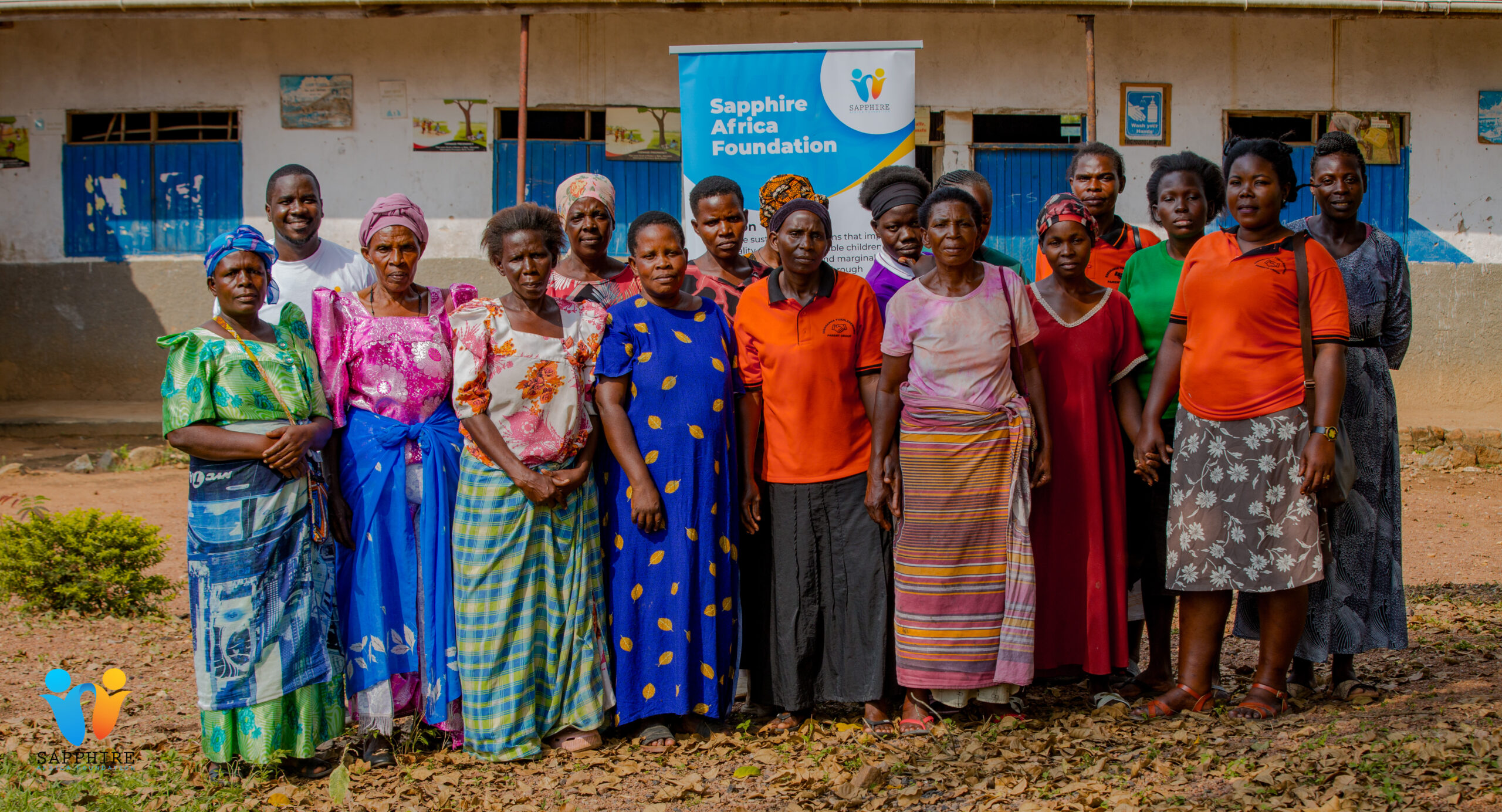
Through the Duchenne Caretaker and Mothers Training Program, the Foundation successfully trained 50 rural women from Nakaseke and Wakiso Districts in practical livelihood skills, entrepreneurship, and financial literacy.
This initiative recognized a critical reality: many mothers of children living with DMD dedicate their lives to full-time care giving, often at the expense of economic independence. By equipping them with income-generating skills, the program redefined care-giving not as a limitation, but as a foundation for empowerment.
Linking Skills to Opportunity: The Sapphire Fund Model
At the heart of this initiative is the Sapphire Fund, a revolving microfinance facility designed to bridge the gap between training and economic opportunity.
Graduates of the program are linked directly to this fund, enabling them to access affordable, low-interest seed capital to launch or expand small businesses, including:
Tailoring and garment production
Poultry farming
Handcrafted goods and local crafts
Fresh produce and market vending
This model ensures that skills acquired during training translate into real, sustainable income streams, creating long-term financial stability for families.
Addressing Economic Vulnerability in DMD Households
For many families living with Duchenne Muscular Dystrophy, financial hardship is a daily reality. A significant number survive on less than UGX 10,000 (approximately USD 2.50) per day, while simultaneously facing:
High and recurring medical expenses
Limited employment opportunities due to care-giving demands
Social and economic exclusion
By targeting mothers and caregivers, this program directly addresses the intersection between disability care and poverty, offering a pathway toward resilience and dignity.
Impact showing off: Measurable Change Within Months
The program has already demonstrated strong early results, highlighting its effectiveness and scalability:
50 women trained in entrepreneurship and vocational skills
32 participants actively engaged in income-generating groups
15 mothers have accessed the Sapphire Fund for business start-up capital
30% average increase in household income within the first six months
These outcomes reflect not just economic improvement, but a broader transformation in confidence, independence, and hope among participating families.
Voices of Transformation
One of the program participants, Sarah, a mother of a child living with Duchenne Muscular Dystrophy in Nakaseke, shared her experience:
“Before this training, I had given up on my dreams. Now I know I can provide for my family and still care for my son. Sapphire has given me a second chance.”
A program coordinator at Sapphire Africa Foundation added:
“We realized that supporting a child with Duchenne goes beyond medical care. When you empower the mother, you strengthen the entire household. This program is about restoring dignity and creating lasting change.”
From Relief to Resilience: A New Model of Impact
This initiative represents a significant shift in the Foundation’s approach—from providing short-term relief to building long-term resilience.
By investing in:
Skills development
Financial inclusion
Community-based support systems
Sapphire Africa Foundation is ensuring that families are not only surviving, but thriving despite the challenges of Duchenne Muscular Dystrophy.
Driving Inclusion Through Economic Empowerment
Beyond individual success stories, the program contributes to a broader vision of disability inclusion and economic participation in Uganda.
It demonstrates that:
Caregivers can be entrepreneurs
Vulnerability can be transformed into strength Communities can grow stronger through inclusive support systems
A Future Built on Strength and Possibility
Through initiatives like the Duchenne Caretaker and Mothers Training Program, the Sapphire Africa Foundation continues to bridge the gap between healthcare support and economic empowerment.
This work stands as evidence that with the right support systems in place, even the most vulnerable families can rise above their circumstances, build sustainable livelihoods, and inspire lasting change in their communities.


Leave a comment